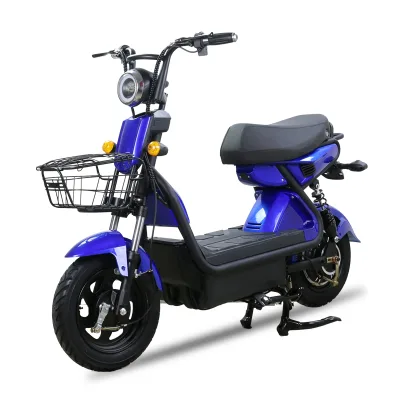
Source two seat electric moped with drum brake for delivery, commuting, and tourism
Compare 30 listings for a two seat electric moped with drum brake featuring steel or aluminum frames, brushless motors, and voltages from 48V to 72V. Buyers can evaluate options with 12-inch to 14-inch wheels, 3-speed gears, and customized colors from manufacturers in China.
Key considerations
Products List




Comprehensive Sourcing Guide
Sourcing Guide for Two-Seat Electric Mopeds with Drum Brakes
Technical Specifications and Component Analysis
When sourcing a two-seat electric moped equipped with a drum brake, buyers must first establish a clear understanding of the technical baseline required for the specific application. The market offers a diverse range of configurations, and the "two-seat" requirement implies a need for a frame structure capable of supporting dual riders, which directly influences the chassis material and suspension design. Based on observed product attributes in the current supply landscape, frame materials typically fall into two primary categories: steel and aluminum alloy. Steel frames, often cited with standards such as "Steel" in product descriptions, provide high durability and cost-effectiveness, making them suitable for heavy-duty urban delivery or high-frequency passenger transport. Conversely, aluminum alloy frames offer a lighter weight profile, which can enhance maneuverability and energy efficiency, though they may come at a higher material cost.
The braking system is a critical differentiator in this category. While the core keyword specifies a drum brake, it is essential to note that the broader market includes dual disc brake systems, such as the "Front and Rear 220 Waterdrop Disc Dual Disc Brake" observed in certain listings. A drum brake system generally offers a sealed design that protects internal components from dust and water, which is advantageous for long-term maintenance in wet conditions. However, buyers must verify the specific brake configuration of the target unit, as some high-performance models may utilize disc brakes for superior heat dissipation during high-speed stops. The presence of a "Brake Line" is a standard observation in the supply data, indicating the hydraulic or mechanical linkage used to actuate the braking mechanism.
Powertrain specifications vary significantly across the observed inventory. Motor types range from brushless motors to brushed motors. Brushless motors are generally preferred for their efficiency, longer lifespan, and reduced maintenance requirements, whereas brushed motors may be found in lower-cost segments. The wattage of these motors spans a wide spectrum, from the 351-500W range to units exceeding 500W, and even reaching the 1001-2000W category for high-performance variants. This variation directly impacts the vehicle's acceleration and ability to carry two passengers. Battery voltage is another pivotal specification, with observed values including 48V, 60V, and 72V. Higher voltage systems typically deliver better power output and efficiency but require more robust battery management systems. Wheel sizes also differ, with 12-inch and 14-inch wheels being common observations, influencing the ride comfort and ground clearance of the two-seat configuration.
Compliance and Certification Verification
Navigating the regulatory landscape is a non-negotiable aspect of sourcing electric mopeds, particularly when the units are intended for international markets. The supply data indicates a variety of certifications that suppliers may claim, including DOT, COC, EPA, CQC, ISO, ENEEC, and CE. However, buyers must treat these as observations rather than universal guarantees. The presence of a "CE" mark is frequently noted, suggesting compliance with European safety, health, and environmental protection standards, but this must be validated against the specific destination market's requirements. Similarly, "EEC" certification is listed, which is relevant for European market access, while "DOT" and "EPA" are critical for United States compliance.
It is imperative to verify that the specific model being sourced holds the necessary certifications for the target region. For instance, a unit marketed with "CQC" certification is primarily relevant for the Chinese domestic market and may not suffice for export to the US or EU without additional testing. The "ISO" certification mentioned in the data points to a quality management system but does not inherently certify the product's safety or performance. Buyers should request valid, up-to-date certification documents for the exact model number, such as "Y2-LX," "Y2-C," "Y4-N1," or "SD," rather than relying on general supplier claims.
Furthermore, the "UL2272" standard, while mentioned in background contexts, should be treated with caution. It is a safety standard for electric vehicle batteries and charging systems, primarily relevant for the North American market. If the sourcing goal includes the US market, verifying UL2272 compliance for the battery pack is essential to mitigate fire risks. However, this standard should not be assumed to apply to every listed product. The "prod_standard" field in the data sometimes refers to physical dimensions (e.g., 16507001000mm) rather than safety standards, so buyers must distinguish between dimensional specifications and regulatory compliance standards.
Cost Drivers and Pricing Dynamics
The pricing of two-seat electric mopeds is influenced by a complex interplay of factors, including battery capacity, motor power, frame material, and certification status. The observed price range in the market spans from $117 to $720 USD, a significant variance that reflects differences in build quality and component selection. The lower end of this spectrum likely corresponds to models with brushed motors, lower voltage batteries (48V or 60V), and steel frames, while the higher end may include brushless motors, 72V systems, aluminum alloy frames, and comprehensive certification packages.
Battery technology is a primary cost driver. The data indicates the use of Lithium Batteries in some models, which are more expensive but offer longer life cycles and better performance compared to lead-acid alternatives. The wattage and voltage of the motor also dictate cost; a 1001-2000W motor system will inherently cost more than a 351-500W unit. Additionally, the "Customization" attribute is widely available, allowing buyers to specify colors, branding, and packaging. Customized colors and branding can add to the unit cost, especially if the order quantity is below the supplier's threshold for standard production runs.
The Minimum Order Quantity (MOQ) is another critical factor affecting the unit price. The observed MOQ range is 1 to 300 units. Orders placed at the lower end of this range (e.g., 1-10 units) will typically command a higher per-unit price due to the lack of economies of scale. Conversely, orders approaching the 300-unit threshold may benefit from significant price reductions. Buyers should also consider the packaging type, which varies from "Integrated Packaging/SKD/CKD" to "Carton Box" or "Cardboard." SKD (Semi-Knocked Down) and CKD (Completely Knocked Down) options can reduce shipping costs by allowing for more efficient container loading, but they may increase assembly costs at the destination.
Typical Applications and Use Cases
The versatility of two-seat electric mopeds makes them suitable for a wide array of applications, from personal transportation to commercial logistics. The "Audience" attribute in the data specifies "Adults," confirming that these vehicles are designed for mature riders, likely requiring a higher weight capacity and stability. The "Range per Power" specifications, observed as 31-60km or greater than 60km, indicate that these vehicles are well-suited for urban commuting and short-to-medium distance delivery tasks.
In urban environments, the two-seat configuration is particularly valuable for ride-sharing services, courier deliveries where a passenger or a second package is involved, and family transportation in regions where car ownership is limited. The "Max Speed" of 20-40km/h aligns with the typical speed limits for electric mopeds in many jurisdictions, ensuring safety and regulatory compliance in dense city centers. The "Gears" attribute, specifically "3 Speed," suggests that these vehicles are equipped with gear systems to optimize performance across different terrains and speeds, enhancing their utility in hilly or varied urban landscapes.
For commercial applications, the durability of the frame material is paramount. Steel frames are often preferred for heavy-duty delivery services due to their robustness, while aluminum alloy frames might be chosen for lighter, faster-paced delivery operations where agility is key. The "Integrated Packaging/SKD/CKD" options suggest that these vehicles are also targeted at distributors who may wish to assemble the units locally, reducing import duties and logistics costs. The "Brand Name" "Youyuan" and various model numbers like "Y2-LX" and "Y4-WG" indicate that there are established product lines designed for specific market segments, allowing buyers to select a model that best fits their operational needs.
Supplier Evaluation and Sourcing Strategy
Evaluating suppliers for two-seat electric mopeds requires a rigorous approach to ensure reliability and product quality. The supply data indicates that manufacturers are located in various regions of China, including Shandong, Tianjin, and Hebei. Each of these locations may have different supply chain ecosystems and manufacturing capabilities. Shandong is known for its heavy industry and manufacturing base, which could be advantageous for steel frame production. Tianjin and Hebei are also significant hubs for electric vehicle manufacturing, offering a range of capabilities from assembly to component sourcing.
Buyers should verify the supplier's production capacity and lead times, although specific lead time data is not provided in the current context. The "prod_packing" options, such as "Cardboard" or "Carton Box," can serve as indicators of the supplier's attention to detail and logistics readiness. A supplier offering SKD/CKD options demonstrates a higher level of technical capability and flexibility, which is beneficial for buyers looking to optimize their supply chain.
When evaluating suppliers, it is crucial to assess their commitment to quality control and after-sales support. The availability of "Customization" suggests that the supplier is willing to work closely with buyers to meet specific requirements, but this also requires clear communication and contract management. Buyers should request samples to verify the quality of the drum brake system, the stability of the two-seat frame, and the performance of the motor and battery. Additionally, verifying the supplier's certification status and their ability to provide valid documentation for the target market is essential to avoid regulatory hurdles.
Quality Control and Long-Term Procurement Considerations
Implementing a robust quality control (QC) process is vital for ensuring the longevity and safety of two-seat electric mopeds. Given the critical nature of the braking system, buyers should prioritize testing the drum brake's performance under various conditions, including wet and dry surfaces, to ensure consistent stopping power. The "Brake Line" system should be inspected for leaks and proper tension to prevent failure during operation. For the frame, buyers should check for weld quality and structural integrity, especially given the load-bearing requirements of a two-seat configuration.
Battery safety is another paramount concern. With observed battery voltages ranging from 48V to 72V, the battery management system (BMS) must be thoroughly tested to prevent overheating, overcharging, or short circuits. If the supplier claims compliance with standards like UL2272, buyers should request third-party test reports to validate these claims. The "Lithium Battery" type observed in the data requires careful handling and storage to maintain performance and safety over time.
Long-term procurement considerations include the availability of spare parts and the supplier's ability to support the product lifecycle. Buyers should inquire about the availability of replacement parts for the motor, controller, and braking system. The "Controller" specifications, such as the "60V12 Tube Module Controller," should be checked for compatibility and ease of replacement. Additionally, the "prod_standard" dimensions, such as 18545110cm, should be verified to ensure that the vehicles fit within the intended storage and transport constraints.
To mitigate risks, buyers should establish clear quality assurance protocols, including pre-shipment inspections and post-delivery performance monitoring. Building a long-term relationship with a reliable supplier can provide access to better pricing, priority production slots, and improved support. However, diversifying the supplier base can also help mitigate supply chain disruptions. By focusing on technical specifications, compliance, and quality control, buyers can successfully source two-seat electric mopeds with drum brakes that meet their operational needs and regulatory requirements.
Comparative Analysis of Key Specifications
To assist buyers in making informed decisions, the following table summarizes the key technical specifications observed in the market for two-seat electric mopeds. This comparison highlights the variations in power, voltage, and materials that influence performance and cost.
| Specification Category | Observation A (Standard) | Observation B (High Performance) | Observation C (Lightweight) |
|---|---|---|---|
| Frame Material | Steel | Steel | Aluminum Alloy |
| Motor Type | Brushless | Brushless | Brush |
| Wattage Range | 351-500W | 1001-2000W | >500W |
| Battery Voltage | 48V | 72V | 60V |
| Wheel Size | 14" | 14" | 12" |
| Braking System | Brake Line (Drum) | Brake Line (Disc) | Brake Line (Drum) |
| Max Speed | 20-40km/h | 20-40km/h | 20-40km/h |
| Range per Power | 31-60km | >60km | >60km |
| Certification | CE, DOT, COC | CE, EEC, ISO | CE, CQC |
| Origin | Shandong, China | Tianjin, China | Hebei, China |
This table illustrates that while many models share similar speed and range capabilities, the underlying components such as motor type, battery voltage, and frame material vary significantly. Buyers should align these specifications with their specific operational requirements, ensuring that the chosen model offers the necessary balance of power, durability, and cost-effectiveness. The presence of different braking systems, including drum and disc options, further underscores the importance of verifying the exact configuration before finalizing a purchase. By carefully analyzing these factors, buyers can navigate the complex landscape of electric moped sourcing with confidence and precision.
FAQs
What certifications are available for two seat electric mopeds?
Available certifications include DOT, COC, EPA, CQC, ISO, ENEEC, and CE. Buyers must verify specific model compliance, as CE and EEC are relevant for Europe while DOT and EPA apply to the US market.
Which battery voltage options exist for these electric mopeds?
Observed battery voltages range from 48V to 72V. Higher voltage systems like 72V typically deliver better power output, while 48V and 60V options are common in standard configurations.
Can I customize the color and packaging for bulk orders?
Customized colors and integrated packaging options like SKD or CKD are available. Customization allows for branding but may affect unit costs depending on the order quantity and specific requirements.
What frame materials are used in these electric moped models?
Frame materials typically include steel and aluminum alloy. Steel frames offer high durability for heavy-duty use, while aluminum alloy frames provide a lighter profile for enhanced maneuverability.
How does the motor wattage affect the performance of the moped?
Motor wattage ranges from 351-500W to over 1000W, directly impacting acceleration and load capacity. Brushless motors are preferred for efficiency, while brushed motors may appear in lower-cost segments.
What is the typical price range for sourcing these vehicles?
The observed price range spans from 117 to 720 USD. Prices vary based on battery capacity, motor power, frame material, and the level of certification included in the specific model.
Which wheel sizes are commonly found in this product category?
Common wheel sizes include 12-inch and 14-inch options. These sizes influence ride comfort and ground clearance, with smaller wheels often found on more compact or lighter models.